Springs versus Dimples and Play in the Connectors
(Last edited 5/14/2026)
First, let’s quickly review some of the different contact areas used on the female terminals. The most common female terminal design is one with two dimples.
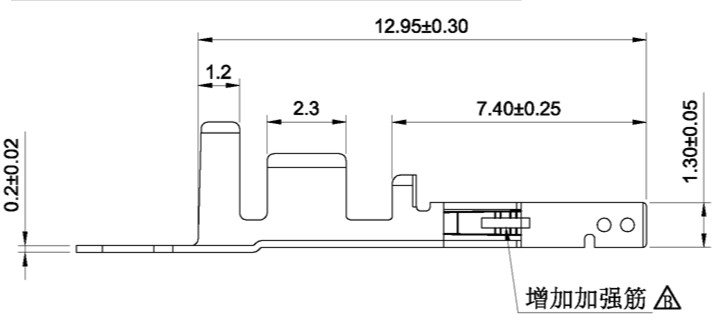
Drawing of a two-dimple terminal
Molex also typically uses two dimples, but some of their better terminals use one large oblong dimple. This design is patented by Molex.
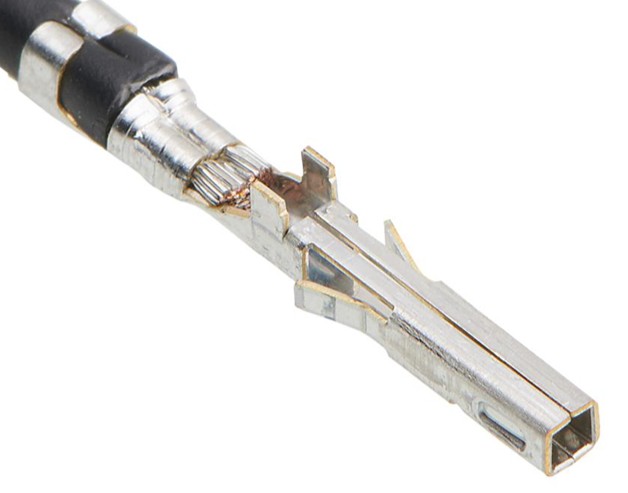
A female Molex terminal with an oblong dimple
The terminal with the most contact area is the terminal with three dimples.
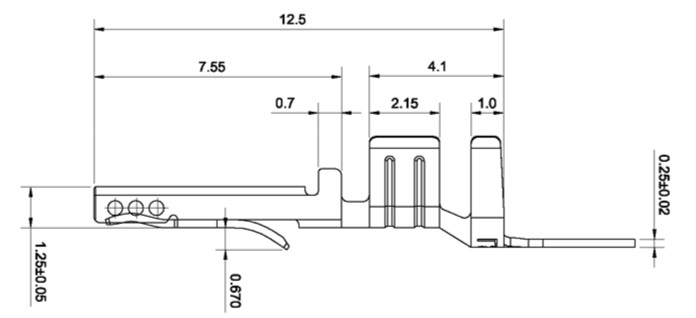
Drawing of three-dimple terminal
Wieson recently entered the ATX terminal market with their innovative four-spring design. Springs aren't new alternatives to dimples for these types of terminals, but manufacturers typically deploy just two springs in what's known as a "low insertion force" configuration. These terminals generally achieve only 75% of the amperage capacity of their dimpled counterparts. By incorporating four springs instead of two, Wieson effectively doubles the contact surface area, addressing this performance gap. However, I remain skeptical about copper's inherent "memory" limitations. But copper’s tendency toward elastic deformation means these springs may gradually lose their resilience after multiple insertion cycles. Steel, one of the best spring materials in the world, would solve this durability issue but presents an unacceptable trade-off with its poor conductivity.
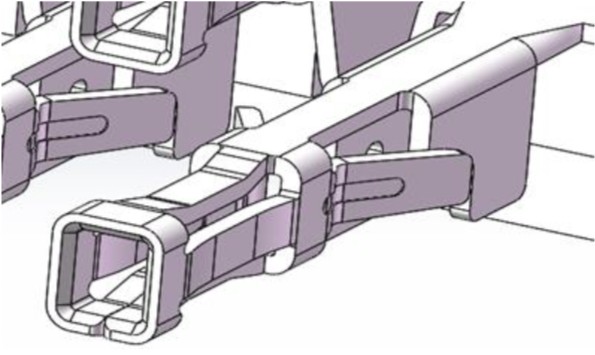
Wieson four-spring terminal
The close up below shows how the contact surface of the female terminal is completely reliant on the dimples or springs. The example shows Molex’s oblong dimple with the yellow lines showing the contact surface of the inside of the terminal where the dimples will make contact with the male pin.
Many products undergo a QC process called an FRI, or “Final Random Inspection”. Essentially, packed out, ready to ship products are taken out of the finished goods and opened up and inspected for quality assurance. Below is an X-ray of some 12V-2x6 connectors on cables that were being checked for consistent mating.
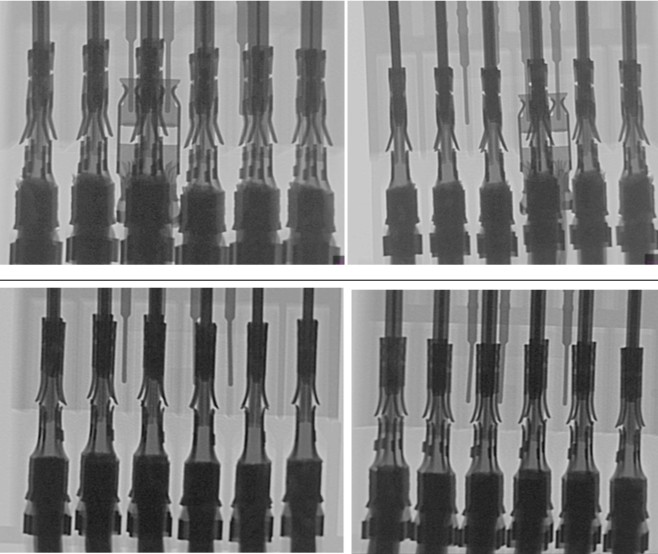
X-ray of mated Micro-Fit terminals used in 12V-2x6 connectors
I mention all of this about the play of the terminals within the connectors because recently, an influencer claimed that movement in the terminals of the 12V-2x6 cable connector housing indicates poor quality or flawed design. This highlights what I noted earlier: nearly two-thirds of influencers admit to sharing unverified information with their audiences. In reality, this terminal flexibility serves a crucial purpose. It allows the female connectors to properly align with the immovable male pins on the graphics card. Once the female terminal's dimples or springs engage with the male terminal, the connection becomes secure and makes complete contact, exactly as engineered.