Introduction
(Last edited 5/14/2026)
PC power supplies are interesting. Some people think it’s just AC input, DC output and that’s all there is to it. Nothing else happens and it doesn’t matter how it happens. I’m not going to say there’s any rocket surgery going on to make it happen, but there is actually quite a bit going on; so I wanted to put pen to paper to explain what it is.
While knowing who I am may not make much difference to how you decide to use the following information, it should give you some insight into where my perspective comes from and why I’ve decided to put this information together.
I’ve spent more than thirty years in the PC hardware industry. Almost exclusively on the DIY side of things. My career began in 1996 at a small computer shop, where I spent almost four years assembling and repairing PCs. After that, I moved on to become head of technical support for a major online PC-components retailer.
In 2005, thanks to industry connections, I stepped into a product manager role overseeing a new line of DIY computer parts. My primary focus was a novel idea at the time, called a “modular power supply”. This was a unit that lets users add or remove cables as needed.
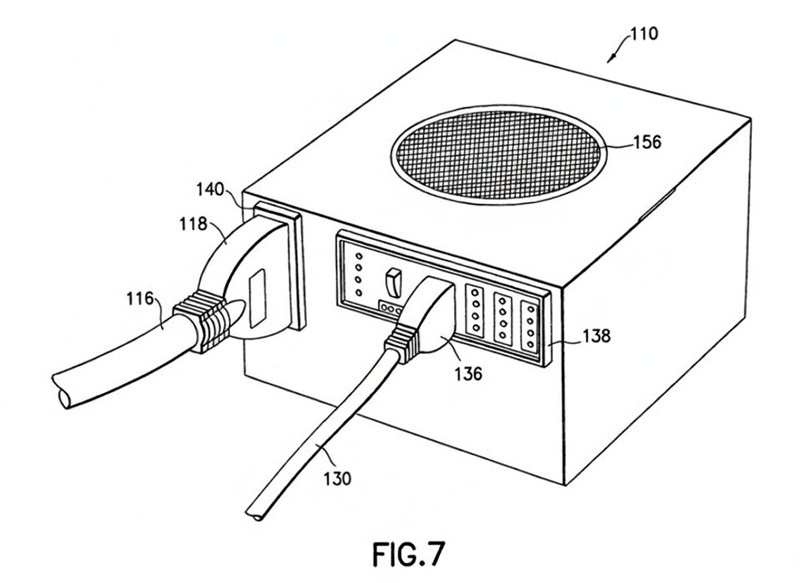
A drawing from Ultra Products’ patent for a modular power supply1.
To help my employer secure a patent on this design, I dove into extensive research on existing power supplies and showed how prior art didn’t cover our innovation. That effort even took me to Washington, D.C., to present our case before the USPTO.
Meanwhile, I ran a side project; a website called “jonnyguru.com”. Having direct access to a wide range of computer hardware, I used the site to write reviews. Naturally, I gravitated towards power supplies, given my expertise.
Now that I am working full time in the industry for a public company, I have had to leave that website far behind me. Like me, many computer hardware reviewers have left their posts in favor of secure tech jobs within the industry. Over the years, the void created has largely been filled with influencers more interested in drama than accuracy. In fact, a UNESCO study in 2024 reported that 62% of those surveyed said they don’t vet the accuracy of their content before sharing it with their followers2. I hope that by writing this e-book I can set at least some records straight.
Though I could apply my knowledge towards designing pretty much any power supply, I’ve been fortunate enough to have my career revolve around desktop computer power supplies, aside from the challenging development of a laptop power brick that needed to be the smallest and thinnest of its type at the time. My love for building my own computers and playing video games has allowed me to keep myself in the DIY PC segment. Because of this, this e-book will primarily address that particular product category.
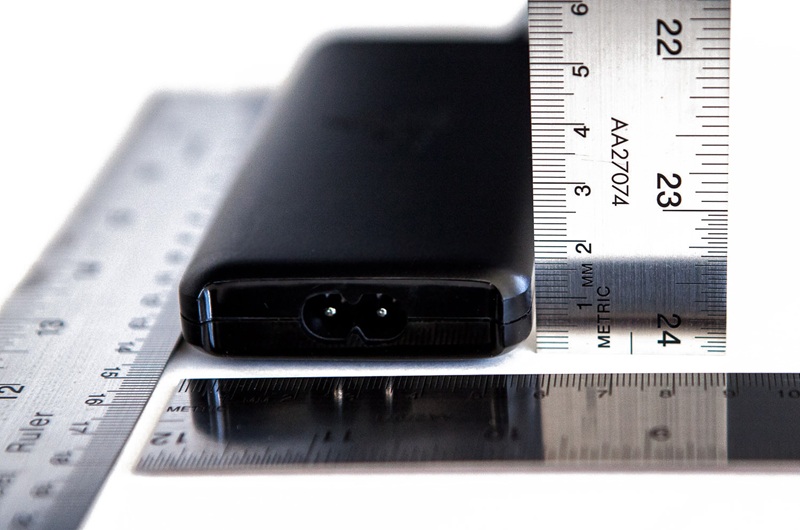
The power brick I worked on with Razer was one of the smallest 120W adapters on the market at the time. Photo from Tom’s Hardware.3
One final note: the chapters explaining how a power supply works aren’t meant to be deep technical dives. They’re high-level and concise. I want you to understand the how and the why without getting into all of the real engineering. Hopefully you can use this information to springboard into a career in engineering or learn just enough so you won’t sound clueless if you end up debating specifications on Reddit.