The Main Transformer
(Last edited 5/14/2026)
That hefty block of wound copper sitting prominently in the center of your power supply, typically labeled "T1" on the circuit board, is the main transformer.
This crucial component creates what’s called "galvanic isolation," establishing an electrical barrier between the primary and secondary sides of the power supply. Without this protective separation, your computer would become a potential death trap. Imagine the low-voltage DC circuitry in your PC suddenly carrying full household current (120V or 230V AC). Touch the chassis while grounded, and you’ll complete a circuit with potentially fatal consequences. Beyond the risk to human life, power surges could jump directly into sensitive components, frying semiconductors instantly and potentially starting fires.
The transformer's job is elegant yet essential: it takes incoming high-voltage, high-frequency current and steps it down to more manageable levels for the secondary- side regulators to process.
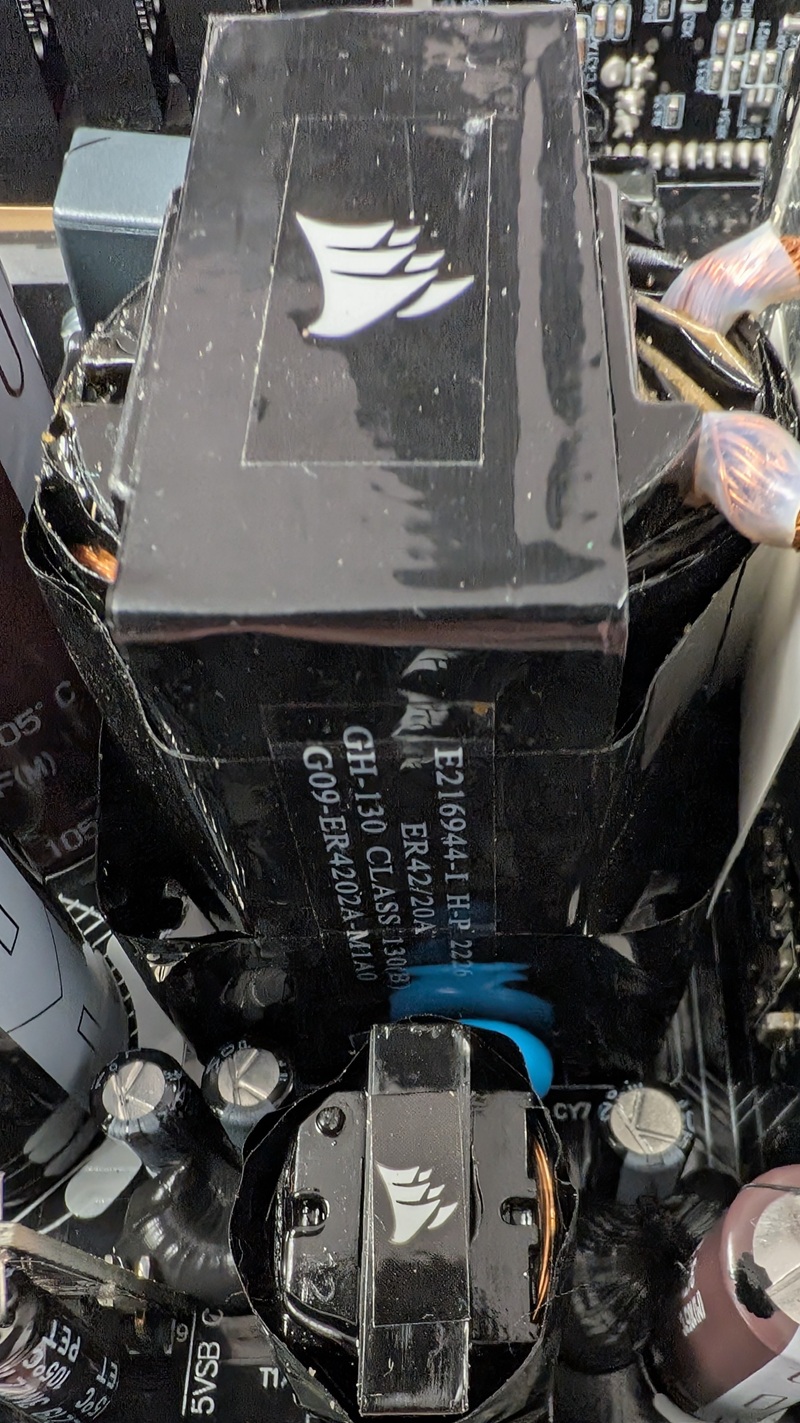
A large +12V transformer on top and a much smaller +5VSB transformer on the bottom. From the inside of a Corsair PSU.
Earlier transformer designs featured multiple windings to directly produce various voltages (+3.3V, +5V, and +12V), while contemporary units often output only +12V, with additional regulation handled elsewhere.